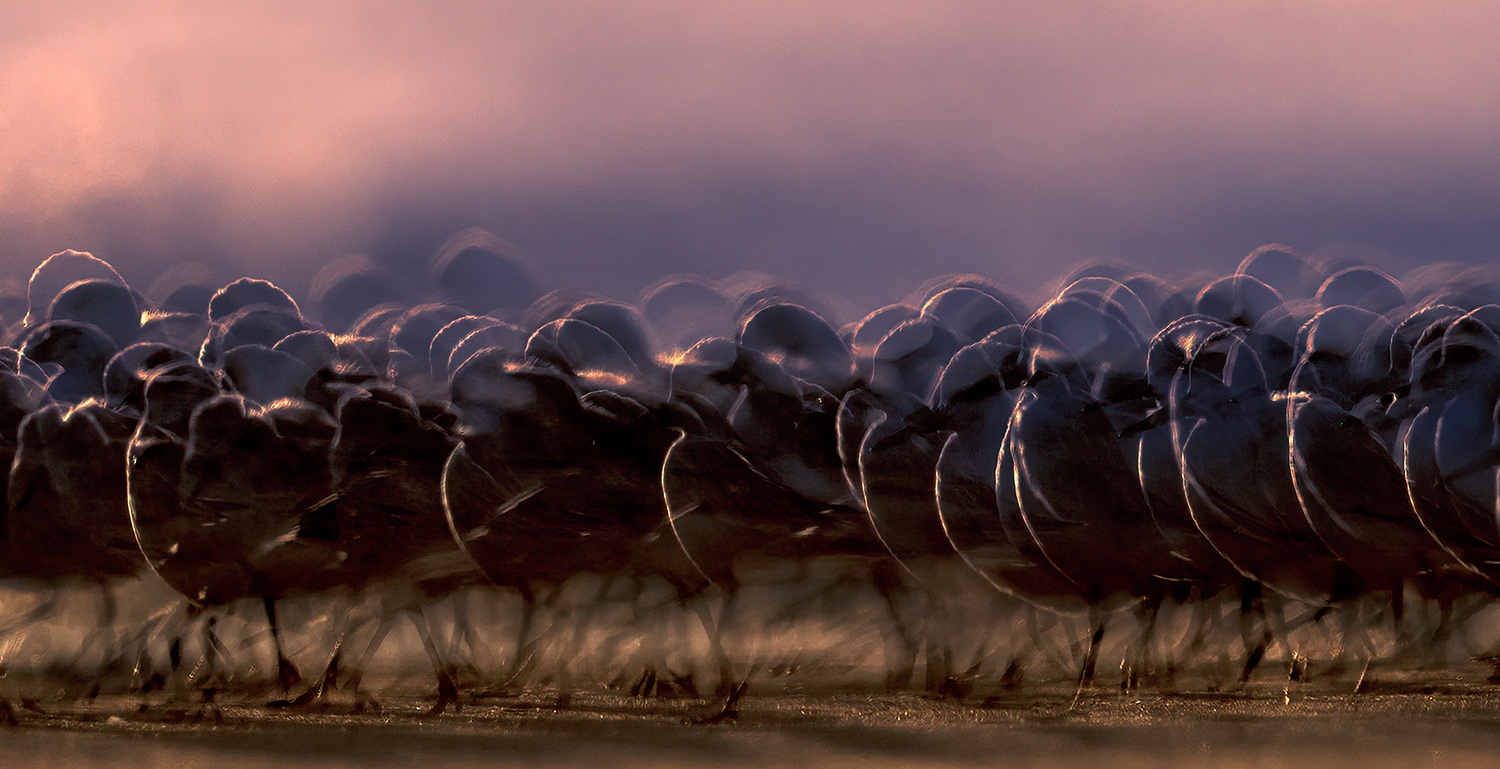
Inspiration
More than a decade ago, during a visit to the Museum of Modern Art (MoMA) in New York, a single painting held my gaze. I was growing weary of the intellectual gymnastics required to parse much of the modern collection, but this work demanded no such strain. Resting my tired feet on a corner bench, I watched throngs of visitors pass by—most glancing briefly at the title plate before moving along. The painting was Dynamism of a Soccer Player, and it introduced me to the Italian Futurist Umberto Boccioni.
As a student of photography, I had always wrestled with a fundamental question: What frees an image from the shackles of its instantaneity? Photography, by definition, freezes motion. While photographers have devised clever ways to render speed, conveying true kinetic energy—the way a painter can layer time across a canvas — remained elusive. Boccioni spent the final years of his life obsessed with this exact problem: how to breathe kinetic energy into a static form.
I dare say that in some youthful arrogance I remember telling myself 'you know what, I think I will take this idea of playing with light, planes and intersecting shapes from Boccioni and see if I can apply it to photography'. Now this is a problem I would like to spend my time failing to solve, but surely I will have fun making images along the way . This was years before I pivoted deeply to bird photography - where my subjects, birds, are all wing and beat, and yet the traditional craft freezes them still.
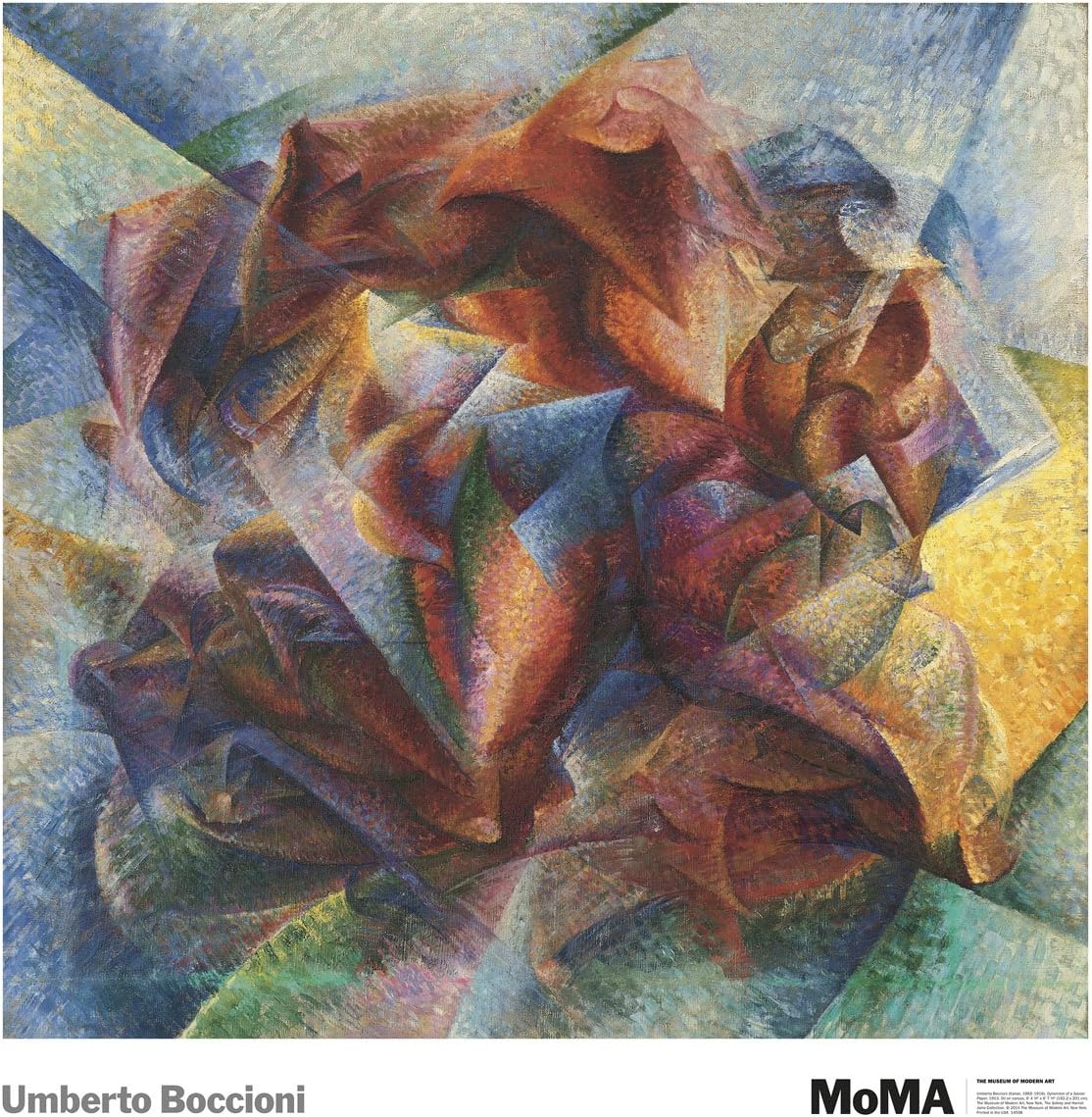
 Dynamism of a soccer player by Umberto Boccioni at the MoMA, New York. Source : wikipedia.org
Experimentation
A classic way photographers have attempted movement is by one or more mechanisms that result in the 'smearing' of light reflected from the subject. A moving object captured with a slow shutter speed will register a diffused sense of movement across the frame in a way that a watercolor painting might become beautiful if exposed momentarily to rain. Similarly a stationary object captured with a moving camera will result in a similar directional smearing, and the two can be combined for some pretty nifty captures.
Motion blur is not actually motion in the truest sense - it is the absence of stillness in an image. Boccioni's soccer player was not blurred. It was fractured into distinct planes that the eye has then to reassemble - and that cognitive act is what produces the sense of dynamism, of energy. It is of course possible to stack images or use post processing of images in a sequence with software techniques, but we are talking about a brief moment and a single frame, captured in-camera.
So, the answer comes in the form of another vector and that is the in-camera multiple exposure setting. My Canon 5DSR, that I purchased in 2017 had this feature and I started playing with it. It allowed from 2 to 9 separate shots to be merged as a single RAW file. But what to choose as the subject? It couldn't be anything too fast and more importantly it had move at roughly the same speed and across the plane of the camera sensor. I tried this on various subjects and with trial and error it became apparent that shorebirds, especially peeps would be good candidates for this experimentation.
The question of dynamism stayed with me and I kept working on the topic of motion. I'm not exactly sure how it happened but I gravitated towards Sanderlings as my subject birds. I found that they were just about the right size to frame in a composition of multiple birds, they moved in close proximity with each other and if one could watch how the foam line of the incoming tide was to arrive, you could almost predict the direction in which the birds would move. Their pale plumage caught the morning light beautifully. I had photographed Sanderlings before on multiple occasions during Fall, as they arrive in San Diego in meaningful numbers. But there was another thing I needed for the recipe to work : I needed very high tides.
Magical Morning
King Tides are the highest (and lowest) tides of the year, formed by the additive pull of the sun and the moon. This happens in the winter months, which is an added gift for photography because it also means a slower sunrise, giving me a longer window of time to work the process.
I still remember that morning. The king tide was forecast to be twenty minutes after sunrise. I arrived at the very tip of the Tijuana estuary mouth under the cover of darkness. I could see a flock of Sanderlings milling about at the estuary mouth. The weekend before I had studied their behavior during a similar early morning high tide and I saw how the tide arrived over the sandy shores and observed that as the mouth got inundated, the birds got bunched together and started to move in predictable patterns. This is what I was looking for. Now, I hoped - that the sunrise would cooperate for that gorgeous winter sunrise light.
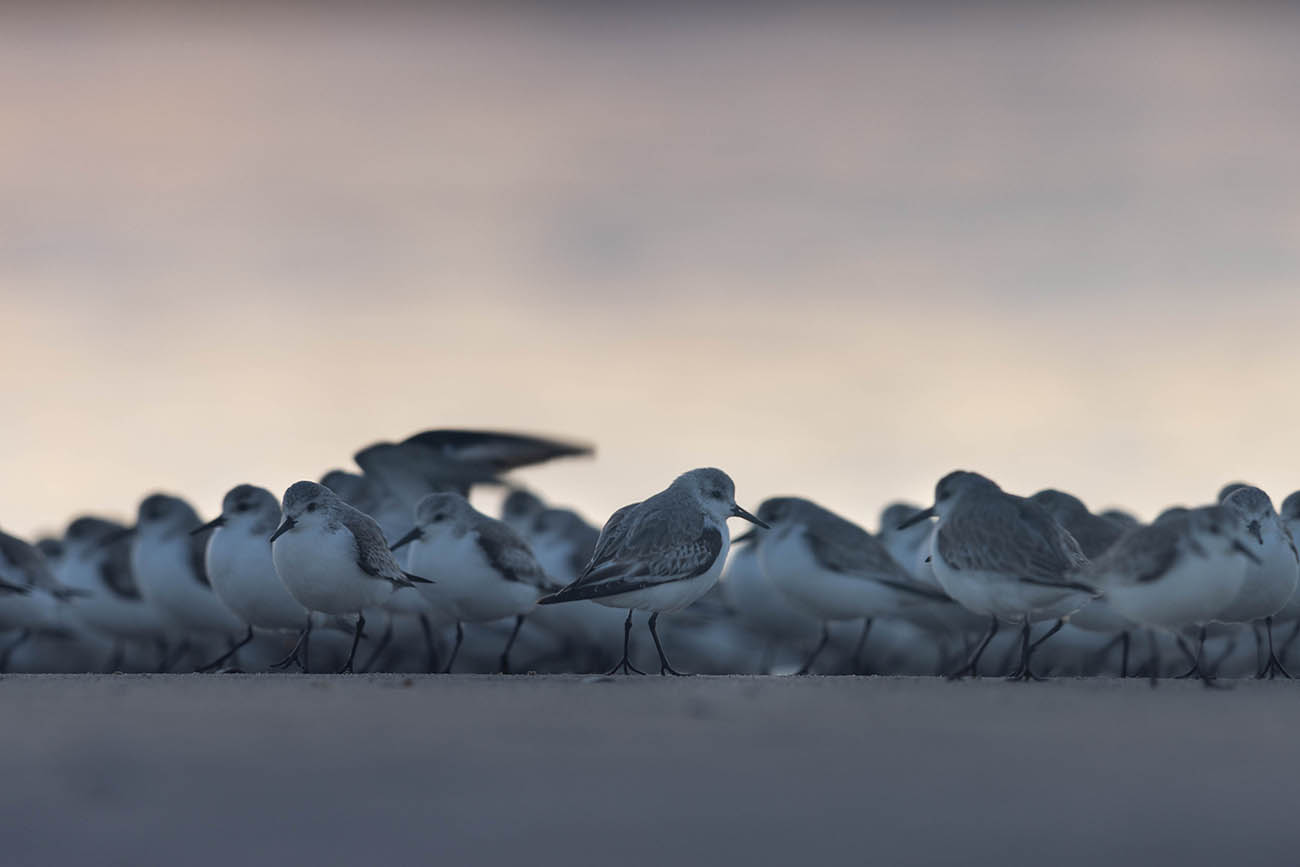 I have situated myself in front of the Sanderlings at a respectful distance. I am using a 600mm lens. The Sanderlings are milling about. Sunrise is still several minutes away.
I set one camera on a tripod in the direction of the rising sun to capture a video, a GoPro was clamped to the same tripod looking towards the ocean. I set myself prone on the cool sand and waited for the light to change. I practiced warm-up shots, moving my camera in small pan motions, playing with the shutter speed and composition. The birds were just about the right distance, they were calm and either unaware or uncaring to my presence. And thankfully there was no other human or animal at the beach at that hour that might otherwise scare the birds.
Sunrise broke behind the hills of Tijuana and a bright amber beam hit the water. I turned towards the flock of Sanderlings that were to my left, looking towards the rising sun. The flock there was a bit more skittish and took to flight multiple times, reorganizing themselves over and over again. The tide continued to rise. In a couple of minutes it became too bright to shoot directly into the sun and I changed my orientation back to the flock directly in front of me. They were in a holding pattern, perhaps anxiously looking at the rising tide and making their calculations.
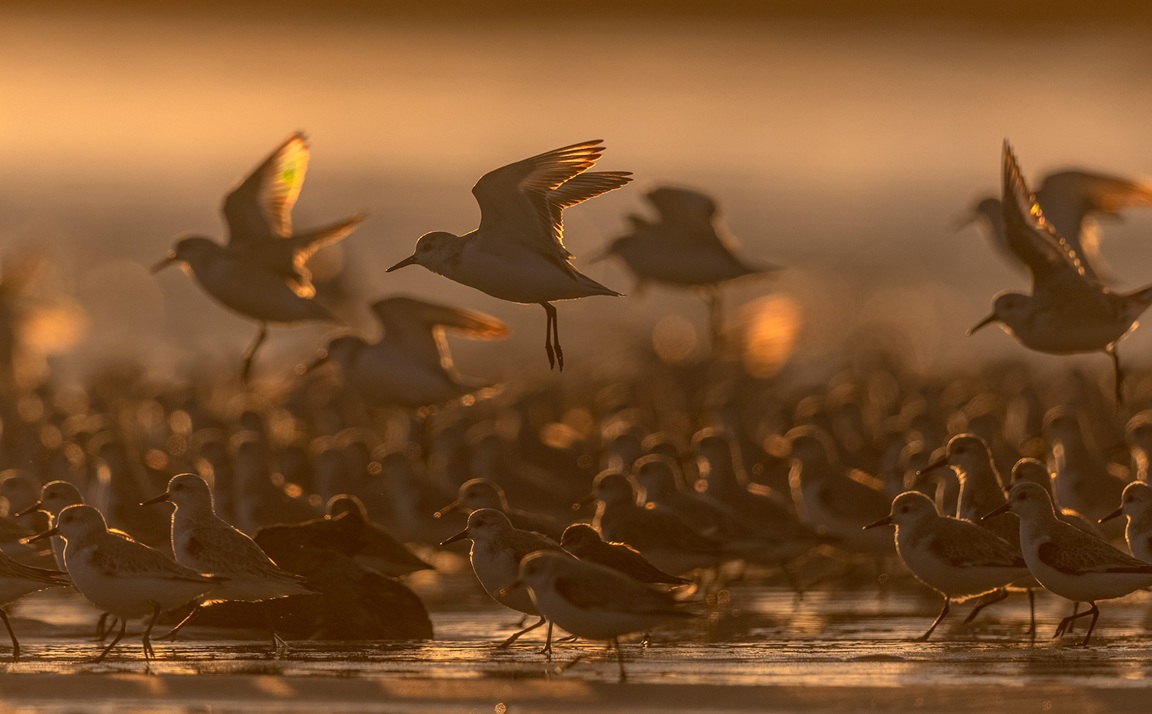 As the tides kept rising, the beach estate got crowded with many Sanderling taking flight to reorganize themselves. This photo was taken mere seconds after the sun broke over the hill.
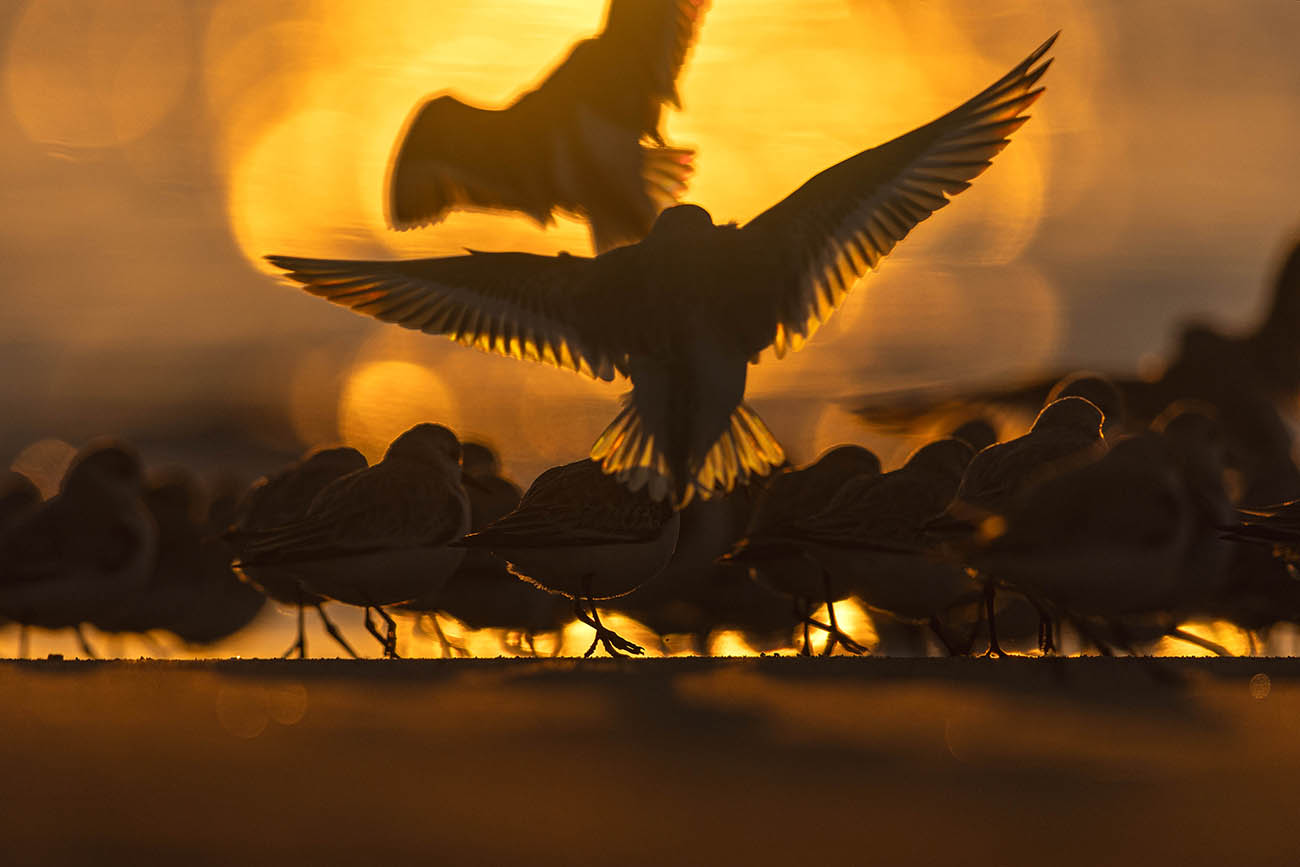 I have to raise my shutter speed and limit the light coming to the sensor. Prismatic effects on the wings can be seen but it is too bright to continue shooting towards the sun.
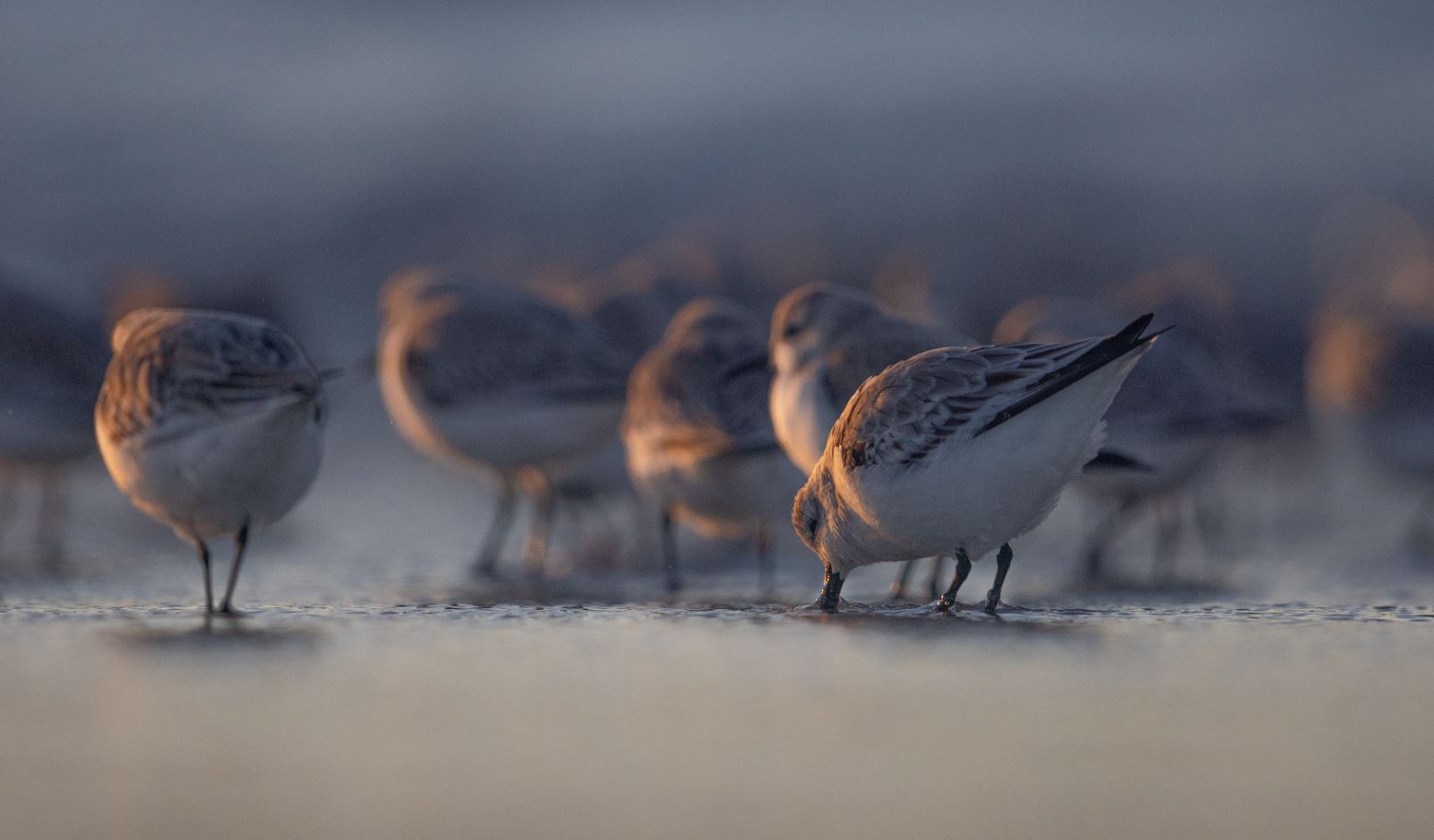 While the flock to my left was active, the flock in front of me stayed put. The light however was excellent. We are still only a few minutes after sunrise.
And then, just like that, like some situations that seem to resolve themselves without any warning, the flock began to move into my plane - reorganizing themselves as the water approached them from both sides and put them in a triangular pinch. They moved in unison in one direction, halted and then reversed course and retreated back to the same starting point. I was ready for this, my camera was in 9x multiple exposure mode and I began to fire away. I had to pan the lens tiny amounts to get a better alignment with the movement and it was one multiple exposure burst after another. I dared not spend too much time looking at my resulting image as the movement frenzy continued and the character of the light was changing every second. I was changing my shutter speeds with the changing light and I even dropped the number of multiple exposures to 8x and then 7x and then 6x. I was in a complete flow state, but quick glimpses of my viewfinder after the burst was complete showed that I was getting something good : the light was a beautiful pink framed with the cool blues of the ocean, the birds were lining up nicely and the mirrored shadows in the sand were reflecting this movement. It was only after I got home and looked at the images on the big screen that I thought that I had a set of images that offered something unique and interesting.
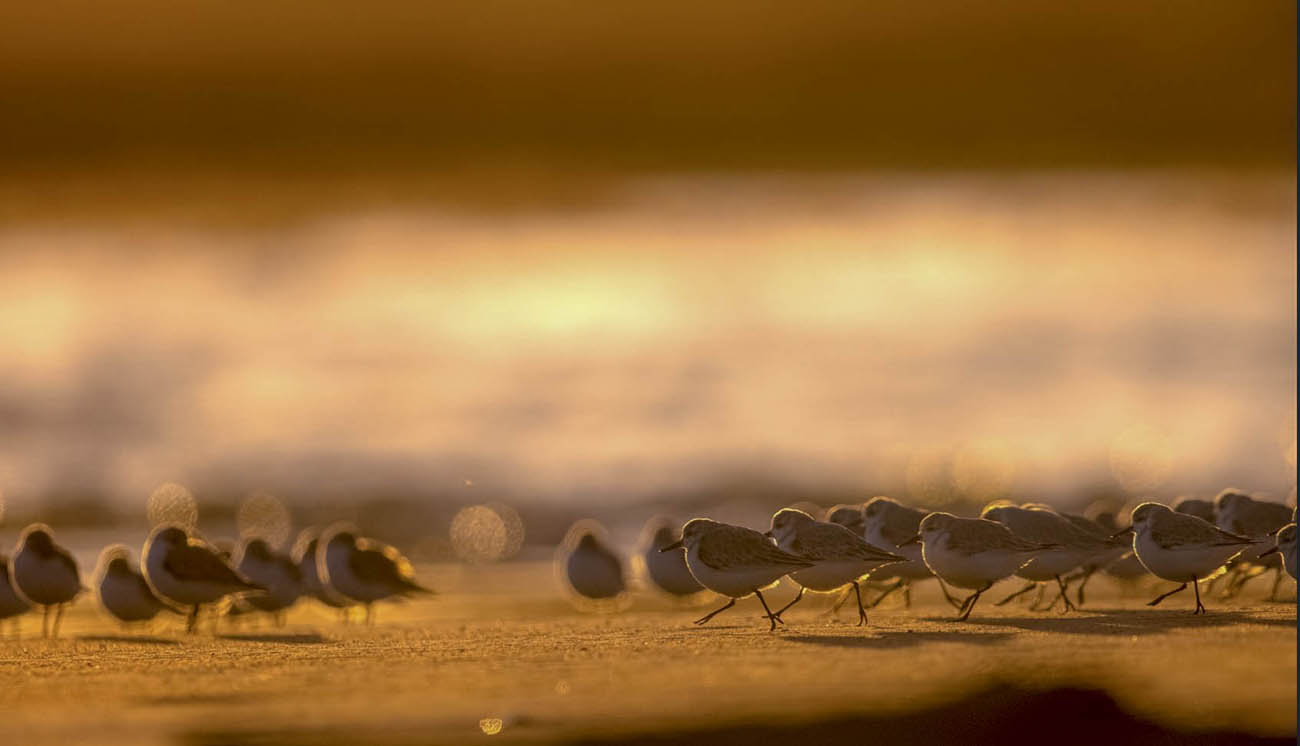 The flock in front of me has started to move. It is time to get into action !
Meditations
I have returned to that same spot of the beach several times since. Just like a game of chess, where the opening moves are familiar but by the middle game you realize that this is something you have never seen before, so it has been with my continuing work with dynamism. The tides are different, the light is not the same, the birds decide to move differently or I am photographing a different species, and my own conscious choices of experimenting with the camera settings make each encounter unique in its own way. I feel it gets you closer to what Boccioni already understood and what I began to understand by imitating him badly with a camera : that dynamism projected into two dimensions of an image, is not a technique that you master, it's a coincidence that by some level of luck, you are allowed to participate in.
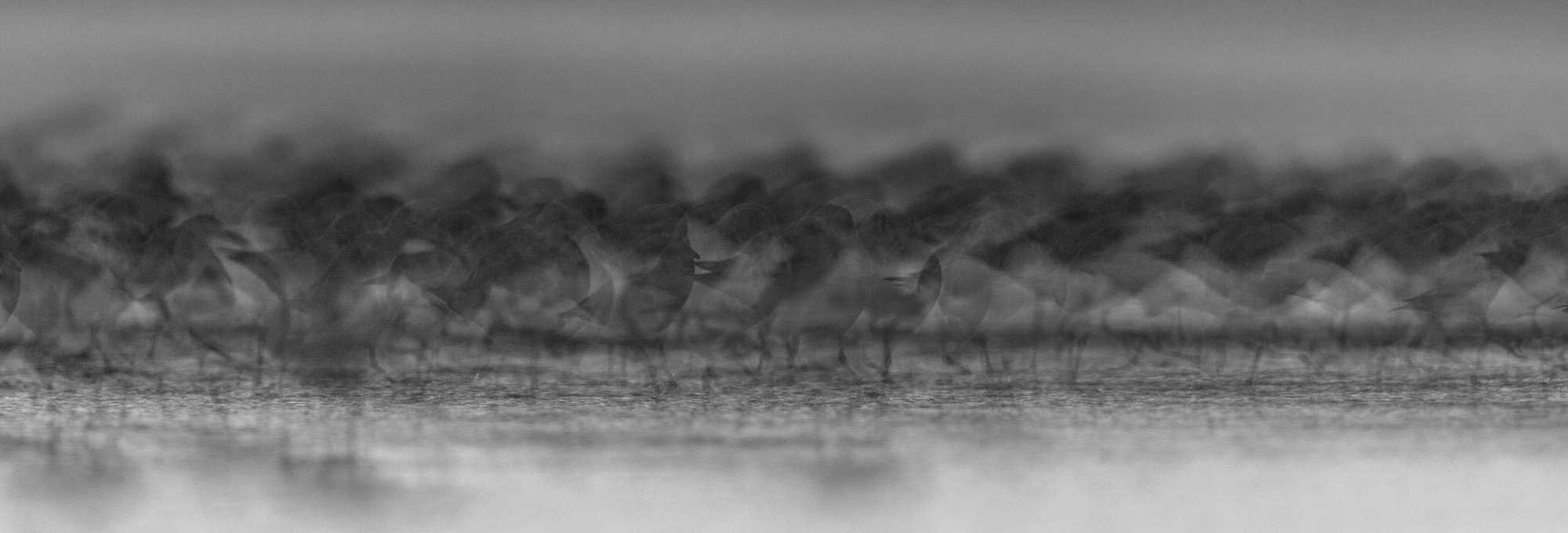 Another multiple exposure image that I created in a different session. This one, I converted to black-and-white. Subtle changes in the environment result in a different set of images.
Epilogue
As I was preparing my images for submission to the 2026 Audubon Photography contest, I called my wife over to review the final shortlist. As she stared at the photo of the Sanderlings, her gaze became intent. Having never seen this image before I could see she was trying to parse its contents and piece them together.
"They look like ballet dancers on water", she said softly.
What title would she give to this photograph, I asked
"Dawn Ballet would be very fitting", she replied.
It was a beautiful, intuitive metaphor — and in that moment, Dawn Ballet was born.
Published Sep 24th, 2026 after the Top 100 photographs for the 2026 Audubon Photography Awards have been announced. This my first inclusion into the Top 100 for this prestigious contest and I am very grateful for this recognition. A huge congrats to the winners and to the fellow Top 100 photographers.